
Clinic Expansion Financing: Budget for Opening and Cash Flow
A clinic expansion needs more than construction funding. Learn to budget for equipment, opening costs and the cash gap before patient revenue is collected.
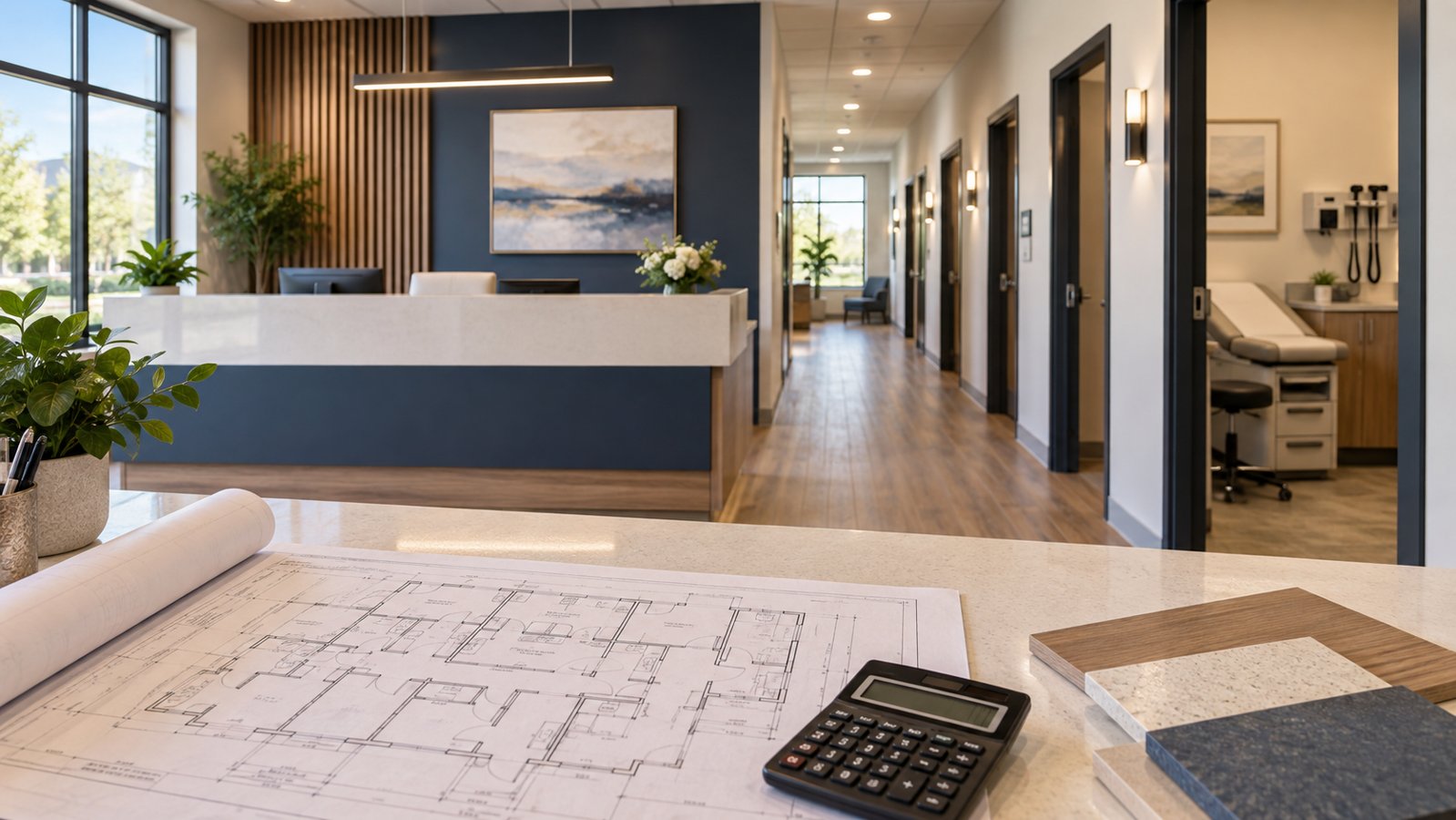
Clinic expansion financing should cover the path from committing to a new location to collecting enough cash to sustain it. A construction quote is only one part of that path. Hiring, training, equipment installation, billing preparation and early operating costs can create a funding gap even when the expansion has a credible long-term business case.
For an established practice adding a location or service line, the useful question is: how much cash is required, in which weeks, and what evidence supports the expected collections? This guide develops a practical budget and illustrates how timing changes the amount to finance. All dollar figures below are hypothetical, not market benchmarks or financing offers.
Separate four uses of funds
Build the request around four schedules. First, list premises and fit-out costs, including deposits, design work, construction and the cash timing of any landlord reimbursement. Second, itemize equipment, installation, IT and training. Confirm what each supplier quote includes and when payment is due.
Third, identify pre-opening costs: recruiting, payroll before patient visits begin, insurance, professional advisers and launch administration. Fourth, forecast the operating cash gap after opening. Include payroll, rent, supplies, billing expenses and proposed debt payments in the weeks they must be paid. Keep a separately explained contingency for unexpected costs; do not count the same allowance twice.
An equipment facility may fund specified assets without covering staffing or rent. A landlord allowance may reimburse eligible work only after conditions are met. Show the usable amount and availability date of every funding source, rather than subtracting all expected contributions from day-one costs.
Forecast collections, not just appointments
Booked visits are not cash in the bank. Build a forecast from service volume, expected collectible amounts and timing. Document the assumptions for each material payer group using the practice's actual experience and applicable contracts. Keep gross billed charges separate from the amounts expected to be collected.
Compare the new location with a relevant operating site, but explain differences in staffing, service mix and patient ramp-up. Show what happens if collections arrive later or volume builds more slowly. A monthly profit forecast can conceal a weekly payroll shortfall, so prepare a weekly cash schedule around the opening period and reconcile it to the wider business forecast.
Use aggregate financial information in a funding presentation. Patient-identifying records are not needed to explain this illustrative budget.
Track billing readiness alongside construction
Create separate milestones for physical completion, staff readiness, required operating approvals, payer enrollment and billing setup. Assign an owner, supporting evidence and a follow-up date to each. An assumed opening date should not stand in for confirmation that every necessary billing step is complete.
For Medicare participation, the Centers for Medicare & Medicaid Services describes an enrollment process that includes working with the relevant Medicare Administrative Contractor, which may request additional information. Verify the requirements and status for the specific provider or supplier rather than assuming one universal completion period. Source: https://www.cms.gov/medicare/enrollment-renewal/providers-suppliers
The budgeting implication is to test delayed collections and document the cash response. Confirm actual enrollment, licensing and contractual requirements with the appropriate authorities, payers and advisers. This article does not determine a clinic's billing eligibility or effective dates.
Worked example: a $2 million expansion
Suppose an established clinic budgets $850,000 for fit-out, $450,000 for equipment and IT, $150,000 for pre-opening costs, $350,000 for the forecast operating cash gap and $200,000 for contingency. Total uses equal $2 million. These are planning assumptions, not typical industry costs.
The owner commits $500,000, leaving a $1.5 million external funding requirement. If a separately approved equipment facility provides $350,000 toward the equipment line, the remaining requirement is $1.15 million. The original $1.5 million external requirement has not disappeared: it has been split between two sources. Avoid presenting the equipment facility as an additional use of funds or subtracting it twice.
Now suppose collections are $80,000 lower than forecast in each of the first two months, with no offsetting reduction in expenses. The additional cash need is $160,000. Covering that amount from the $200,000 contingency leaves only $40,000 for other surprises. If the sponsor wants to preserve the original contingency, the total funding plan instead needs another $160,000. This sensitivity illustrates why a profitable forecast can still require more opening liquidity.
Prepare a financeable explanation of the gap
Match each funding discussion to the cost being financed and its expected repayment source. Long-lived assets, temporary collection gaps and operating losses during a new site's ramp-up are different needs. Ask prospective providers which costs are eligible, when funds become available and what conditions apply to each draw.
Compare the whole cash obligation: fees, interest, principal repayments, security, guarantees, reporting and any restrictions that affect cash availability. Have advisers review proposed terms. Do not assume a facility advertised for working capital will be available before the clinic has the evidence or receivables that its provider requires.
Present a base case and a downside case. Explain who supplies additional cash, which spending can be deferred and what milestone would trigger a phased opening. Protect the established practice's operating needs when considering owner contributions or support from its cash balances.
Funding request checklist
- A clear expansion scope, requested amount and timetable.
- A sources-and-uses schedule that reconciles to supplier quotes and the cash forecast.
- Evidence of owner contributions and the conditions on other proposed funding.
- Historical practice financials, current results and an existing-debt schedule.
- Aggregate payer mix, collection experience and documented forecast assumptions.
- A readiness tracker for premises, staffing, approvals, enrollment and billing.
- Base and downside cash forecasts with an identified response to a shortfall.
Frequently asked questions
Should a clinic finance only the construction budget?
The request should explain the complete funding plan. Construction finance may cover only specified costs; equipment, pre-opening spending and the early operating gap need identified sources too. The appropriate structure depends on the transaction and provider.
Can forecast billings be treated as available cash?
No. Forecast receipts should reflect what is expected to be collected and when. Keep billed charges, expected collections and actual cash receipts distinct, and test delays instead of assuming immediate payment.
Does a completed budget guarantee approval?
No. A coherent budget helps a provider evaluate a request, but approval still depends on its independent assessment, documentation, terms and conditions.
Discuss your clinic expansion with CGFS
Creative Global Funding Services connects qualified businesses and project sponsors with potential capital providers and reviews funding requests of USD $1 million or more. Bring a reconciled budget, supporting financial information and a clear account of the cash required before the new site supports itself. Funding is subject to independent due diligence, underwriting, acceptable terms and final approval.
Review the CGFS funding process: https://www.creativeglobalfundingservices.com/cgfs-funding-process/
Contact CGFS about your expansion: https://www.creativeglobalfundingservices.com/contact.php
This article provides general business funding education. Project requirements and financing availability vary; seek advice appropriate to your circumstances.
Featured image: AI-generated conceptual illustration, not an actual CGFS client or financed property.
More Funding Insights

Healthcare Funding in the USA: A Business Guide | CGFS
Healthcare organizations need capital for acquisitions, facilities, equipment, staffing, technology, and day-to-day liquidity. This guide explains the principal healthcare funding options in the USA and how borrowers can prepare a stronger financing request.
Read insight →
Equipment Installation Budget: Costs Beyond the Purchase Price
Build an equipment installation budget covering delivery, site readiness, commissioning and operating cash, with a worked example and funding checklist.
Read insight →
Equipment Financing Quotes: A Payment Comparison Worksheet
Compare equipment financing quotes using upfront cash, scheduled payments, final obligations and ownership. Includes a worked example and practical checklist.
Read insight →