
Equipment Financing Quotes: A Payment Comparison Worksheet
Compare equipment financing quotes using upfront cash, scheduled payments, final obligations and ownership. Includes a worked example and practical checklist.
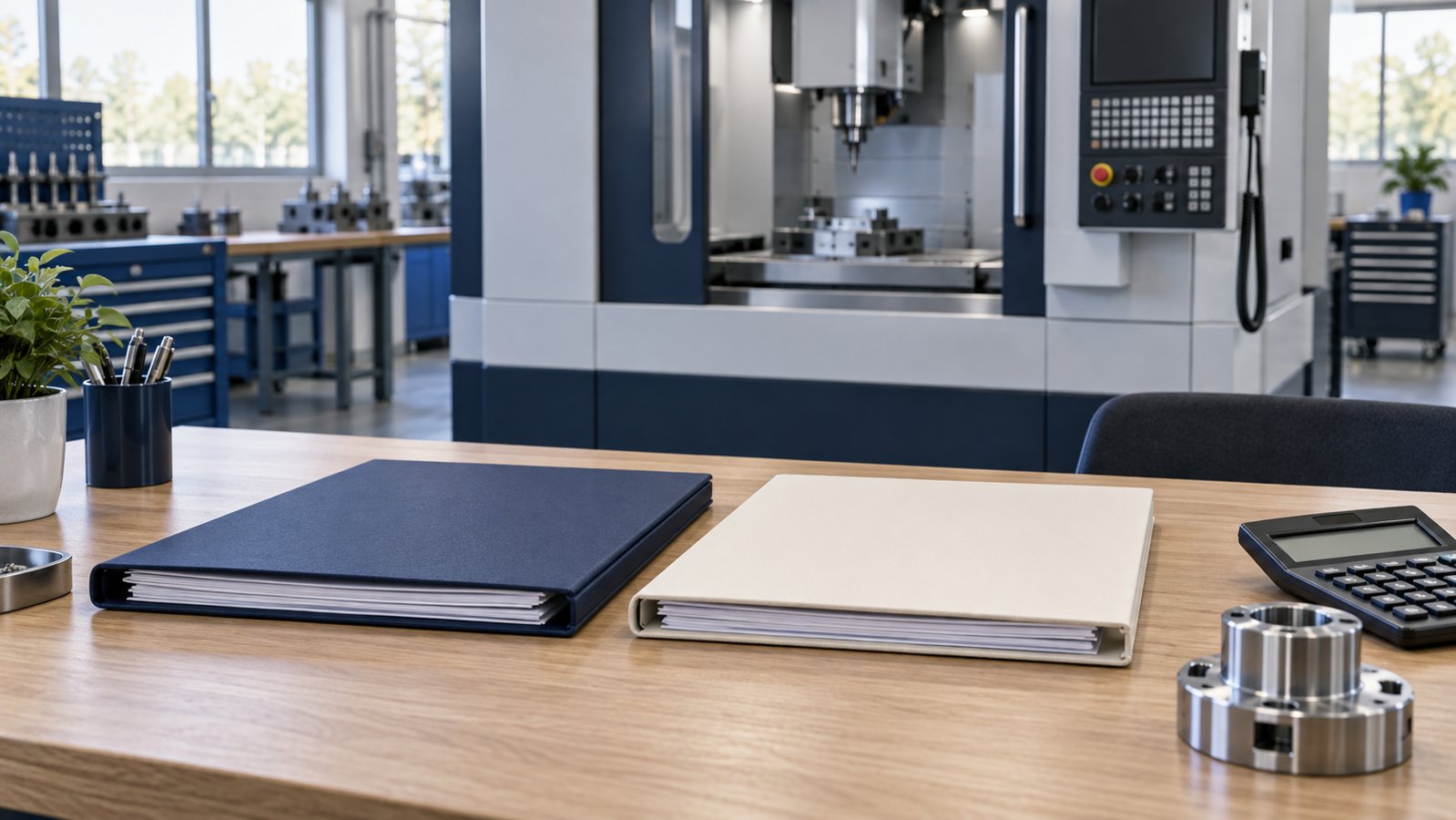
Equipment financing quotes can look similar until you put every payment on the same timeline. A smaller monthly amount may come with more cash due at signing, a longer commitment or a substantial payment at the end. This worksheet helps business owners turn proposals into a comparison they can discuss with their finance team.
Use it after obtaining written indicative terms for the same equipment. It is a decision aid, not a financing offer or a substitute for reviewing the actual contract. All amounts in the worked example are hypothetical US dollars.
Define the outcome you want to compare
Start with the same equipment specification, purchase price, currency and planned period of use. Then state the desired outcome: use the machine for five years and return it, or own it after five years. Comparing those outcomes without adjustment can make one proposal appear cheaper simply because it leaves you with different rights at the end.
BDC, Canada’s business development bank, recommends considering upfront amounts, lease payments, end-of-lease purchase costs and broader operating implications, then testing the options in cash-flow projections. Its guidance also recommends input from financial and professional advisers. Source: https://www.bdc.ca/en/articles-tools/money-finance/get-financing/buy-lease-business-equipment
Build four rows for each proposal
Row one is cash due at signing: the down payment or initial rental, separately charged fees and any security deposit. Label refundable amounts separately from permanent costs. If an advance payment is already part of the quoted payment count, do not add it again.
Row two is the dated payment schedule. Record the number and amount of payments, the first due date and whether the price can change. “60 months” alone does not establish whether there are 60 additional payments after signing. Ask the provider to reconcile the schedule in writing.
Row three is the end-of-term obligation: any balloon, purchase option, renewal requirement or return expense relevant to your chosen outcome. Row four is what remains afterward: ownership, a return obligation or continued payments. Mark an unknown buyout as unknown rather than entering zero.
Worked example: lower monthly payment, higher total cash
Assume two indicative proposals cover the same $1.2 million equipment package over 60 months. Both examples exclude taxes, operating costs and fees other than those expressly listed. For comparison, the business wants to own the equipment after the term.
Proposal A requires $240,000 down, a separate $12,000 fee and 60 monthly payments of $19,000, with no final balloon. Under the assumed terms, ownership is retained after all obligations are met. Total nominal cash paid is $240,000 + $12,000 + (60 × $19,000) = $1,392,000.
Proposal B requires a $60,000 initial payment, a separate $12,000 fee, 60 additional monthly payments of $18,000 and a fixed $300,000 purchase option if the business chooses ownership. Cash paid to own is $60,000 + $12,000 + (60 × $18,000) + $300,000 = $1,452,000. The initial payment is explicitly additional to the 60 installments in this example.
B has a monthly payment that is $1,000 lower and requires $180,000 less upfront, but costs $60,000 more in nominal cash to reach the assumed ownership outcome. If B allows return instead of purchase, its $1,152,000 total before return expenses leads to a different outcome: no equipment ownership. It should not be presented as the cost to own.
These sums are not an annual percentage rate, a present-value calculation or an after-tax ranking. Payment timing, fees and retained cash have economic value. Ask your finance team to model dated cash flows, tax treatment and an appropriate discount rate before deciding which proposal is preferable.
Test the final payment before choosing the smaller installment
If the business plans to buy under Proposal B, show the source of the $300,000. Setting aside $5,000 each month for 60 months would accumulate that amount before interest, tax or investment effects. In that simple reserve scenario, the monthly cash allocation becomes $23,000: the $18,000 payment plus the $5,000 reserve.
That reserve is not a second financing charge and must not be added to the total purchase cost again: it is the source of the eventual buyout payment. The exercise shows why a low installment can still require a larger cash-planning commitment. If the plan depends on refinancing or resale instead, test what happens if that source is unavailable or insufficient.
A checklist for your quote comparison
- Use the same asset specification, currency, comparison horizon and desired ownership outcome.
- Separate down payments, advance installments, fees and refundable deposits.
- Obtain a complete dated payment schedule and identify any variable pricing.
- Record the final payment, purchase-option formula and return or renewal conditions.
- Ask for an illustrative early-exit calculation at the date you might change equipment.
- Identify maintenance, insurance, usage and modification obligations that differ between proposals.
- Show the effect on operating cash and identify a supported source for any final payment.
Resolve missing terms before ranking quotes
Create an “open questions” column beside the numbers. If a proposal omits a fee, end-of-term value or termination condition, leave the comparison provisional. Send the same questions to each provider so that a detailed quote is not penalized for disclosing a cost that another proposal has simply left unstated.
Keep the quotation date, expiry, assumptions and approval conditions with the worksheet. An indicative proposal is not the same as committed funding. Have the final documents checked against the comparison before committing to an equipment purchase.
Frequently asked questions
Is the lowest monthly payment the cheapest option?
Not necessarily. The example shows how upfront cash and a purchase option can reverse that impression. Compare the complete schedule and the same end-of-term outcome, then assess timing and business fit.
Can I assume I will own leased equipment at the end?
Use the written agreement to establish the available options, price and conditions. Do not assume ownership transfers merely because the last regular payment has been made.
Should a refundable deposit count as a cost?
Show it as cash tied up and record when and under what conditions it is expected to return. Distinguish its liquidity effect from permanent expense; do not assume a refund if the conditions have not been established.
Prepare your equipment funding discussion
Creative Global Funding Services connects qualified businesses and project sponsors with potential capital providers and reviews funding requests of USD $1 million or more. Bring the equipment details, proposed terms, supporting financial information and your comparison worksheet. Funding is subject to independent due diligence, underwriting, acceptable terms and final approval.
For broader preparation, read the CGFS large-equipment financing guide: https://www.creativeglobalfundingservices.com/large-equipment-financing-a-strategic-guide-to-business-growth-cgfs/
Contact CGFS to discuss your equipment or expansion capital requirement: https://www.creativeglobalfundingservices.com/contact.php
This article provides general business funding education. Obtain advice appropriate to your contracts, jurisdiction and financial circumstances. Featured image: AI-generated conceptual illustration, not an actual CGFS client or financed asset.
More Funding Insights
Equipment Installation Budget: Costs Beyond the Purchase Price
Build an equipment installation budget covering delivery, site readiness, commissioning and operating cash, with a worked example and funding checklist.
Read insight →
Large Equipment Financing: A Strategic Guide to Business Growth | CGFS
Learn how large equipment financing can preserve working capital, increase capacity, and support sustainable business growth. Explore key structures and qualification factors.
Read insight →
Export Order Financing: Match Payment Terms to Cash Needs
An overseas order can be profitable and still leave a cash gap. Compare payment terms, map production and collection dates, and prepare a supported financing request.
Read insight →