
Construction Finance
Construction finance can provide capital for qualified ground-up commercial and multifamily developments. Learn what lenders and investors may review when evaluating a construction project.
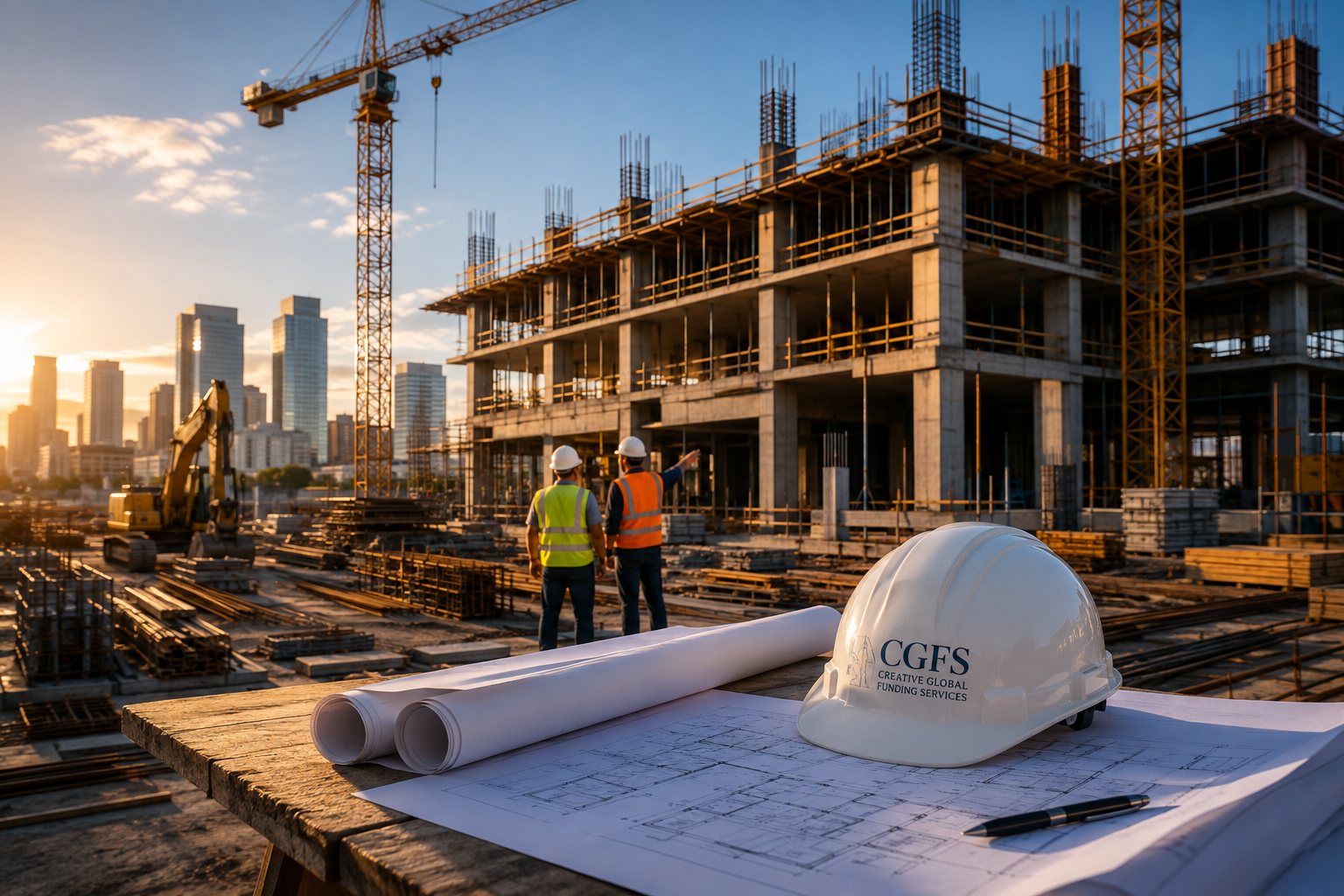
Construction finance can provide the capital required to develop a new commercial or multifamily property from the ground up. Unlike financing for an existing stabilized property, a construction transaction must account for development costs, project timing, permits, contractor performance, market conditions, sponsor experience, and the property’s expected value and cash flow after completion.
Creative Global Funding Services works with qualified developers, sponsors, property owners, and investors seeking access to private lenders, institutional investors, family offices, and alternative capital providers.
Construction opportunities are reviewed individually because the appropriate financing structure depends on the property type, geography, development stage, project economics, borrower equity, and current capital-provider requirements.
What Is Construction Finance?
Construction finance is funding used to cover costs associated with developing a new property or substantially completing a development project.
Unlike a conventional mortgage on an existing property, construction financing is generally advanced as work progresses rather than providing the full amount at closing.
Funds may be released according to an agreed draw schedule tied to specific stages of construction.
Construction financing may be considered for projects such as:
Multifamily developments
Apartment communities
Mixed-use projects
Office buildings
Industrial properties
Warehouses and distribution centers
Retail developments
Hospitality projects
Medical and healthcare facilities
Self-storage facilities
Other qualified commercial developments
The exact property types considered will depend on the capital provider and the economics of the project.
Ground-Up Construction Financing
Ground-up construction financing is intended for projects where a developer is creating a new property rather than purchasing an existing completed building.
These transactions typically require a detailed development plan before financing can proceed.
Capital providers may review:
Site ownership or purchase agreement
Property valuation
Zoning
Permits and approvals
Development budget
Construction schedule
Contractor qualifications
Architectural and engineering plans
Sponsor experience
Borrower equity
Market demand
Projected stabilized value
Exit or permanent financing strategy
A well-prepared request allows lenders and investors to understand both the cost of completing the project and the anticipated value once construction is finished.
Commercial Construction Loans
Commercial construction financing may support the development of income-producing or owner-occupied commercial properties.
Projects can range from relatively straightforward single-building developments to complex phased projects involving significant infrastructure and multiple uses.
Potential uses of financing can include:
Land acquisition when appropriate
Site preparation
Infrastructure
Building construction
Materials
Labor
Professional fees
Equipment associated with the property
Interest reserves
Contingencies
Certain pre-opening or operating costs
The structure of a commercial construction loan depends heavily on the project and the lender’s underwriting requirements.
Multifamily Construction Finance
Multifamily development is a major segment of commercial real estate finance.
Capital providers evaluating apartment or other multifamily construction may consider local housing demand, rents, vacancy rates, comparable properties, construction costs, sponsor experience, and expected stabilized performance.
A multifamily financing request may include:
Number and type of units
Unit mix
Project location
Land cost
Construction budget
Projected rents
Market study
Development schedule
Sponsor equity
Expected operating expenses
Stabilized net operating income
Permanent financing or sale strategy
The quality of the market analysis can be especially important when a project’s success depends on future leasing.
Loan-to-Cost and Sponsor Equity
One of the key measures in construction financing is loan-to-cost, commonly referred to as LTC.
LTC compares the amount being financed with the total cost of the project.
Capital providers generally expect project sponsors to contribute some level of equity or other acceptable financial participation.
The amount required varies according to factors such as:
Property type
Project risk
Sponsor experience
Market conditions
Location
Pre-leasing or pre-sales
Available collateral
Project economics
Capital-provider requirements
There is no single LTC level that applies to every construction project.
Applicants should avoid assuming that a particular leverage level will automatically be available.
Development Budget
A detailed and realistic development budget is essential.
The budget should account for both hard costs and soft costs.
Hard costs may include:
Site work
Building materials
Labor
Mechanical systems
Electrical systems
Plumbing
Landscaping
Roads and parking
Construction equipment
Soft costs may include:
Architecture
Engineering
Legal services
Permits
Insurance
Financing costs
Development fees
Marketing
Professional consulting
Interest reserves
Projects should also include an appropriate contingency for unexpected costs.
Incomplete or unrealistic budgets can create problems during underwriting and later during construction.
Construction Draws
Construction financing is often funded through a series of draws.
Rather than receiving the entire loan amount at once, the borrower requests funds as eligible work is completed.
Before releasing additional capital, a lender may require:
Draw request documentation
Invoices
Contractor certifications
Inspection reports
Updated budgets
Evidence of completed work
Lien waivers
Confirmation that the project remains on schedule
The draw process helps ensure that financing remains aligned with actual construction progress.
Contractor and Development Team
The experience of the project team is an important underwriting consideration.
Capital providers may review the background of:
Developer
General contractor
Architect
Engineer
Property manager
Construction manager
Other key consultants
A sponsor with a successful history of completing similar projects may be viewed differently from a first-time developer.
Applicants should provide clear biographies and relevant project experience for key principals and team members.
Permits, Zoning and Entitlements
Construction projects generally require multiple approvals before development can proceed.
Depending on the property and jurisdiction, these may include:
Zoning approval
Building permits
Environmental approvals
Utility approvals
Site-plan approval
Development agreements
Access rights
Other municipal or regulatory approvals
Capital providers may want to know which approvals have already been obtained and which remain outstanding.
A project that is fully entitled and ready to begin construction may present a different risk profile from a project still facing significant approval uncertainty.
Market Analysis
A construction project needs more than a good design. It must also have a viable market.
For commercial developments, lenders and investors may review:
Existing supply
Planned competing projects
Vacancy
Lease rates
Sales activity
Population trends
Employment
Economic conditions
Tenant demand
Comparable properties
The specific analysis will depend on the property type.
For example, underwriting a new apartment community is different from evaluating a warehouse, hotel, medical facility, or retail development.
Pre-Leasing and Pre-Sales
Some construction projects can be strengthened through pre-leasing or pre-sales.
A lender may view signed leases, tenant commitments, purchase contracts, or other evidence of demand as reducing certain development risks.
However, requirements vary significantly.
Some projects may be financeable without substantial pre-leasing, while other capital providers may require meaningful commitments before funding construction.
Financial Projections
Construction financing generally requires financial projections demonstrating how the completed project is expected to perform.
Depending on the development, projections may include:
Development costs
Construction timeline
Lease-up assumptions
Rental rates
Occupancy
Operating expenses
Net operating income
Debt service
Stabilized value
Sale proceeds
Investor returns
Assumptions should be realistic and supported by relevant market information whenever possible.
Interest Reserves
Many construction projects do not generate sufficient operating income during development to make regular debt payments.
For that reason, the capital structure may include an interest reserve.
An interest reserve is an amount included in the project budget to cover scheduled interest during some or all of the construction period.
Whether an interest reserve is available, and how it is structured, depends on the lender and transaction.
Contingency Reserves
Unexpected costs are common in development projects.
Material prices can change, site conditions can create additional work, schedules can slip, and design modifications can increase costs.
Capital providers may therefore require a contingency reserve within the development budget.
The appropriate contingency depends on factors such as the project type, complexity, stage of planning, and certainty of construction pricing.
Exit Strategy
Construction lenders generally want to understand how their financing will be repaid.
Common exit strategies may include:
Permanent financing after stabilization
Sale of the completed property
Sale of individual units
Refinancing
Other project-specific liquidity events
The proposed exit should be realistic and supported by the expected economics of the completed project.
Construction-to-Permanent Financing
Some projects may use a construction facility that transitions into longer-term financing after completion and stabilization.
Other projects use separate construction and permanent lenders.
The most appropriate structure depends on the transaction and capital-provider requirements.
Sponsors should consider permanent financing early in the development process rather than waiting until construction is nearly complete.
Documentation for a Construction Finance Request
A professionally prepared request can help the initial review move more efficiently.
Supporting documentation may include:
Executive project summary
Funding amount requested
Sources and uses of funds
Development budget
Construction schedule
Property information
Purchase agreement or evidence of ownership
Appraisal or valuation
Architectural plans
Engineering information
Permits and entitlements
Contractor information
Sponsor biographies
Historical financial information
Financial projections
Market study
Pre-leasing information
Borrower equity information
Existing debt
Proposed exit strategy
Not every transaction requires exactly the same documentation.
The capital provider will ultimately determine what is necessary for underwriting and due diligence.
Construction Finance Is Transaction-Specific
Construction projects involve many variables, and financing cannot be evaluated solely on the requested loan amount.
Capital providers may consider the complete transaction, including the sponsor, project, market, budget, collateral, leverage, timeline, approvals, development team, and exit strategy.
A strong project with organized documentation and realistic financial assumptions is generally easier to evaluate than an incomplete proposal.
Creative Global Funding Services connects qualified project sponsors and businesses with potential private and institutional capital sources.
If you are seeking USD $1 million or more for a qualified commercial or multifamily construction project, you may submit a funding request for an initial review.
Submission does not guarantee lender or investor interest, approval, closing, or funding. All transactions are subject to independent underwriting, due diligence, acceptable terms, satisfactory documentation, and final approval.
More Funding Insights
Commercial Lease Rollover Budget: Schedule Improvements and Leasing Costs
Build a commercial lease rollover cash budget for tenant improvements, commissions and vacancy. Includes a worked example, delay scenario and checklist.
Read insight →
Commercial Rent Roll: A Financing Preparation Checklist
Prepare a commercial rent roll that connects leases, collections and upcoming expirations. Includes a rent reconciliation example and lease rollover checklist.
Read insight →
Commercial Property Funding Brief: A Practical Worksheet
Build a clear property funding brief covering the asset, intended use, capital requirement, supporting evidence and open questions before an initial funding discussion.
Read insight →