
Commercial Property Funding Brief: A Practical Worksheet
Build a clear property funding brief covering the asset, intended use, capital requirement, supporting evidence and open questions before an initial funding discussion.

A commercial property funding conversation is easier to follow when the asset, requested capital and business purpose are described together. A short property brief gives the reader a starting point and helps identify information still needed. It does not replace underwriting, a valuation or a complete application.
Use the worksheet below as an internal preparation aid. Creative Global Funding Services connects qualified businesses and project owners with potential capital providers, with a focus on funding requests of US$1M+.
1. Describe the property as it stands today
Record the location, property type, approximate size, current ownership or acquisition status and present use. Distinguish an operating property from a vacant building, proposed development or renovation project. Date the information so a reader knows which version is current.
• Asset: What is the property, and where is it located?
• Current position: Is it owned, under contract or still being evaluated?
• Use: What happens there today, and what is proposed?
• Evidence: Which documents support these statements?
2. Connect the funding amount to its purpose
List the uses of capital separately: acquisition, refinancing, improvements, professional costs or other project costs. Identify the currency, preparation date and whether amounts come from quotations, signed agreements or estimates. Separate the total project cost from the amount being requested. Describe any proposed sponsor contribution without presenting uncommitted funds as available cash.
A useful sentence is: “We are seeking [amount and currency] for [specific uses], within a total project budget of [amount], with [proposed contribution and its status].” Leave unknown figures visibly marked as pending.
3. Explain timing and dependencies
Identify the desired funding date and why it matters. Note contract milestones, quotation expiry dates, planned works and permissions still outstanding. A target date is a planning assumption, not a promise that financing can close by that date. Explain what changes if a key milestone moves.
4. Keep facts and projections separate
For an income-producing property, distinguish current leases and actual operating results from proposed occupancy, future rents and projected costs. State the period covered by each figure and link it to its supporting schedule. If the plan depends on renovation or leasing, explain that dependency rather than treating the future position as established.
5. Add an evidence and questions list
Finish with two short lists. The first names supporting material already available, such as a purchase agreement, rent roll, operating statement, project budget or relevant plans. The second records missing information, the person responsible for obtaining it and the next review date. Share confidential material through an agreed appropriate channel, rather than publishing it in a blog comment or social post.
A simple example
Consider a hypothetical business seeking to acquire and improve a commercial building. Its brief would separate the purchase price from the improvement budget, explain whether quotations are firm, identify the proposed equity contribution and show how the operating plan depends on completing the work. This example illustrates preparation only; it is not a CGFS transaction or a funding offer.
Common questions
Does a completed brief mean the property qualifies?
No. Capital providers apply their own criteria and due diligence. A well-organized brief helps communicate the request but does not establish eligibility or approval.
What if some information is unavailable?
State what is missing and how you expect to obtain it. A clearly identified gap is more useful than an unsupported estimate presented as fact.
Where can I start a discussion?
Review the CGFS funding solutions (https://www.creativeglobalfundingservices.com/solutions.php) and funding process (https://www.creativeglobalfundingservices.com/process.php), then use the initial funding inquiry (https://www.creativeglobalfundingservices.com/request-funding.php) to describe your opportunity. You can also call Greg at your convenience at +1-778-350-4129. Funding remains subject to review, due diligence and final approval.
Further reading: The U.S. Small Business Administration explains the importance of a business case, financial information and a clear funding need in its guide to obtaining additional funding (https://www.sba.gov/business-guide/grow-your-business/get-more-funding). This general planning resource does not imply SBA affiliation or access to any particular program through CGFS.
The featured image is an AI-generated conceptual illustration, not a photograph of a property financed by CGFS. This article provides general preparation information.
More Funding Insights

DSCR and Debt Yield: How Commercial Property Loans Are Sized
Understand how commercial real estate lenders compare property income with debt payments and loan balances, with clear calculations and practical preparation steps.
Read insight →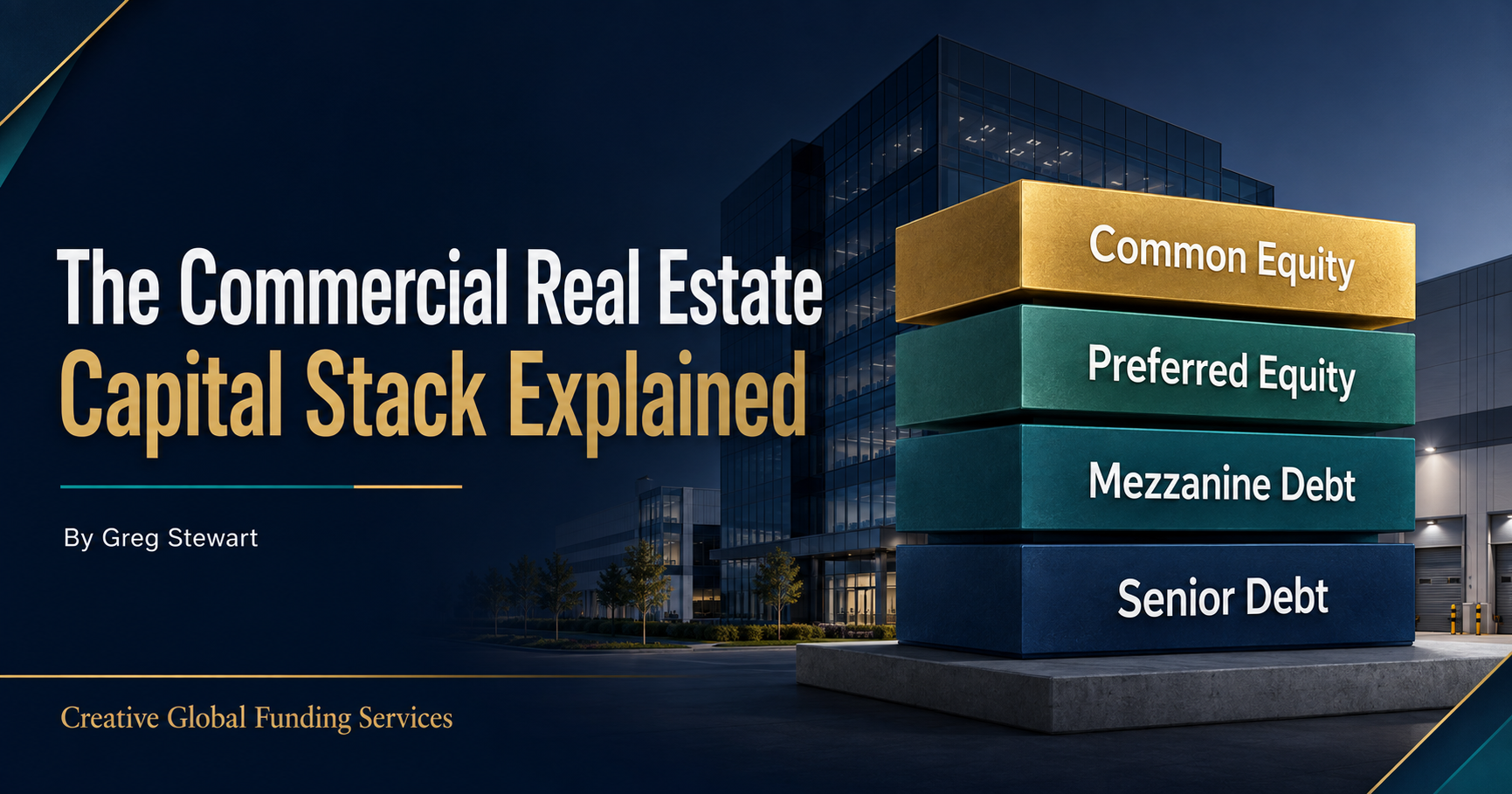
The Commercial Real Estate Capital Stack Explained
Understand how senior debt, mezzanine financing, preferred equity, and common equity work together, with a $10 million project example and practical financing considerations.
Read insight →
Commercial Construction Financing: Requirements, Terms and Process
Commercial construction financing is built around project readiness, sponsor strength, a verified budget and a credible repayment strategy. This guide explains the requirements, terms and process for qualified projects.
Read insight →