
Mining Project Funding: Budget for the Next Milestone
Connect a mining funding request to a defined technical milestone, a supported budget and a clear decision point, with an illustrative funding-gap calculation.
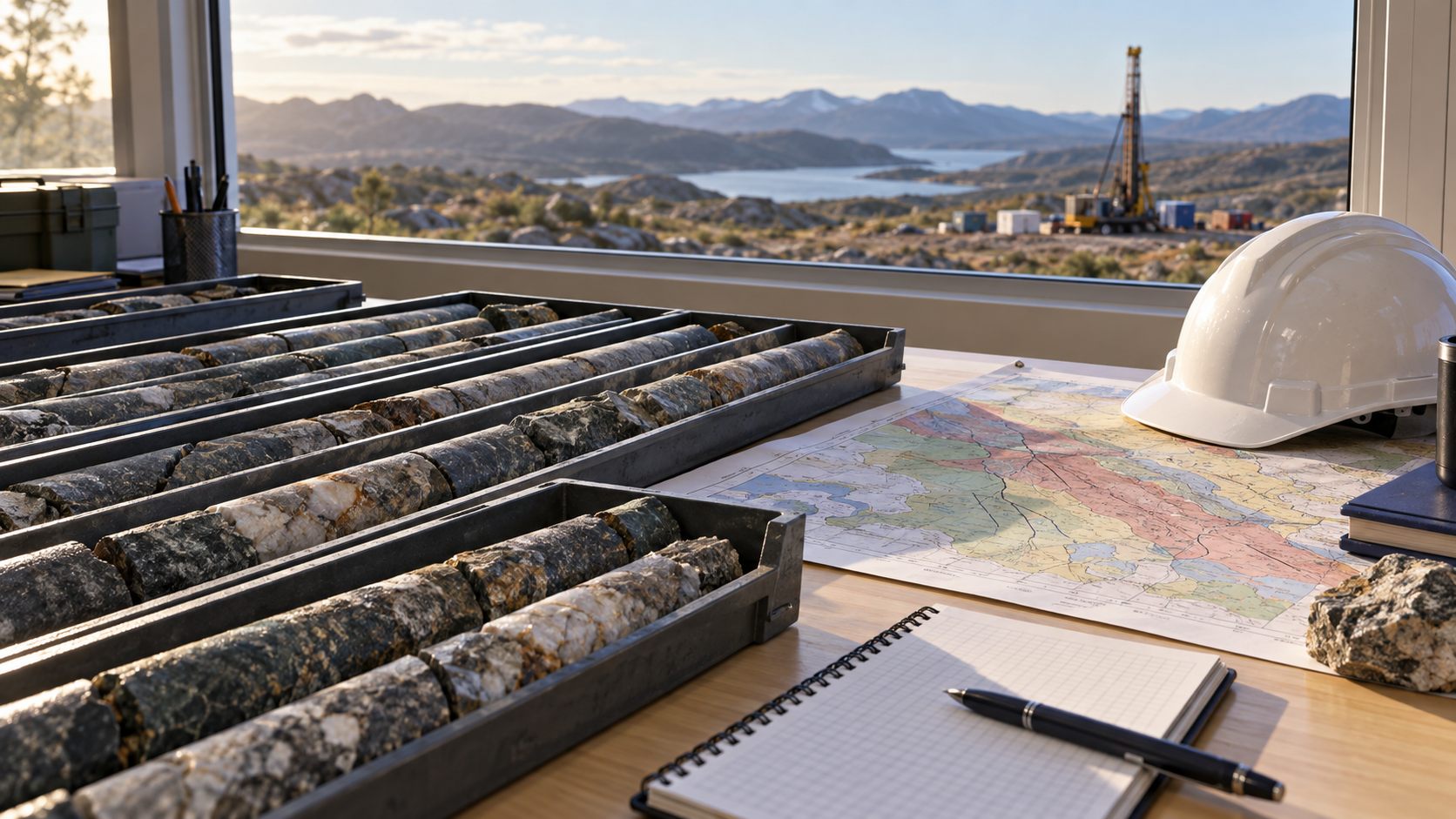
A mining project funding request becomes easier to evaluate when it explains what the next dollar will accomplish. Instead of presenting only a large total development number, identify the next decision the project must support, the work needed to reach it and the cash required along the way. This guide offers a practical milestone-budget method for sponsors preparing a funding discussion. It does not establish eligibility or promise capital.
Define the next decision before choosing the funding amount
Write a one-sentence objective that describes a deliverable, not a hoped-for valuation. For example: “Complete the specified metallurgical test program and receive an interpreted technical report so the team can decide whether to advance the proposed processing route.” The scope should be prepared with the appropriate technical professionals. Completion of a test program cannot guarantee a favorable result.
For each milestone, record the starting evidence, the work package, the responsible professional, the deliverable, the target date and the decision that follows. Distinguish activities from outcomes: drilling completed, results received and a technical interpretation delivered are different events. A financing plan should allow time and money for the work that turns field activity into usable evidence.
Keep technical labels tied to their source
CIM publishes definitions and guidance for mineral resources, mineral reserves and mining studies used in Canada. Its standards page identifies those definitions as incorporated by reference into NI 43-101. That is a reporting framework, not a financing commitment. Other jurisdictions have their own requirements. Have the relevant qualified professionals confirm which terminology and disclosure rules apply.
In the funding package, identify the title, author, effective date and scope of each technical report. Quote classifications accurately and retain the report’s qualifications. Do not relabel a resource as a reserve, treat exploration results as established mine economics, or present an old estimate as current without appropriate review. The aim is to make the evidence traceable, including what it does not yet demonstrate.
Build a milestone budget with visible assumptions
Create a separate budget for the defined work package and reconcile it to the longer-term project plan. For each cost, show quantity, unit rate or quote, timing, currency and supporting evidence. Label estimates and allowances clearly. Keep money already spent separate from cash still needed; historical expenditure is not automatically available cash or an accepted future equity contribution.
A useful planning schedule asks these questions:
• Technical work: what fieldwork, laboratory work, interpretation and reporting are included?
• Access and logistics: what mobilization, transport, site support and seasonal constraints affect delivery?
• Environmental and social work: what studies, engagement and specialist input are required for this stage?
• Corporate and professional costs: what must be paid while the work and review are underway?
• Contingency and timing: what uncertainty is covered, and who approves spending the allowance?
CIM’s ESG guidance addresses environmental, social and governance information in exploration, studies and operations. For this budget, the practical implication is to identify the relevant work early with qualified advisers. Do not treat unresolved environmental or community matters as a generic line to fill in after capital has been raised.
Illustrative example: a $2.4 million work program
Consider a hypothetical program with $1.20 million of field and laboratory work, $350,000 of technical interpretation and reporting, $250,000 of environmental and social work, $200,000 of logistics, $150,000 of corporate and professional costs and $250,000 of contingency. Total planned uses are $2.40 million. These are invented figures for arithmetic, not mining cost benchmarks or CGFS financing terms.
Suppose the sponsor can contribute $650,000 of cash and a strategic investor has committed $900,000 for the same eligible program. Identified sources total $1.55 million, leaving an $850,000 gap. A further $500,000 under discussion does not close that gap until its commitment, conditions and timing are understood. A complete sources-and-uses schedule keeps committed and prospective money separate.
Now assume a two-month delay adds $45,000 per month of site support and corporate cash costs. The additional requirement is $90,000. If covered entirely from the $250,000 contingency, $160,000 remains for other uncertainty. Do not count that same contingency again as spare cash for an unrelated expansion. Test the payment calendar as well as the total: deposits can fall due before an expected funding installment arrives.
Connect the milestone to the capital discussion
Explain whether the proposed work is intended to reduce technical uncertainty, support an investment decision or enable a defined next stage. Ask potential providers what evidence they need and whether funding would be available upfront or in stages. If there is no operating cash flow, explain the proposed repayment or investor exit assumptions without presenting a later capital raise as assured.
CGFS’s broader Mining Finance guide discusses structures that may include equity, joint ventures, equipment finance and debt, depending on the project. The milestone method does not select a structure automatically. Compare any proposal against the actual work program, including ownership effects, payment obligations, conditions and the consequences of an unfavorable technical result.
Set a decision point for disappointing results
A credible plan describes what happens if the work does not support the original thesis. Agree who reviews the result, which further work would need approval and how much cash remains for unavoidable obligations. A “pause and reassess” decision should be financially possible, rather than leaving the team dependent on immediate new funding.
Keep the technical conclusion separate from the fundraising target. Spending the full budget is not proof that the milestone succeeded. Record what was learned, what uncertainty remains and which assumptions in the next-stage budget need revision.
Funding-package checklist
• One-page milestone objective and the specific decision it will inform.
• Current technical evidence, report references and material limitations.
• Itemized work budget, quotes, currency assumptions and payment calendar.
• Committed sources, conditions, sponsor cash and the unresolved funding gap.
• Relevant rights, approvals, environmental and social work, and outstanding dependencies.
• Delay and cost scenarios, contingency controls and a plan for unfavorable results.
Frequently asked questions
Does completing a technical study guarantee mining finance?
No. A study supplies evidence for review. Capital providers make their own decisions based on the project, risks, economics, sponsor and proposed terms.
Should the request cover the entire future mine?
Explain the full project context, but identify exactly what the current request funds. Separate the defined program from later work that remains conditional or unpriced.
Can an expected investment be counted as committed capital?
Keep it in a separate prospective category until the commitment and its conditions are documented. Confirm when funds can be used and whether they cover the same costs as your budget.
Discuss qualified mining funding needs with CGFS
Creative Global Funding Services reviews qualified business and project requests of USD $1 million or more and connects applicants with potential capital providers. Bring a clear milestone objective, supporting evidence, budget and requested amount. Every opportunity is reviewed individually; funding remains subject to independent due diligence, acceptable terms, documentation and final approval.
Related guide: https://www.creativeglobalfundingservices.com/mining-finance/
Contact CGFS: https://www.creativeglobalfundingservices.com/contact.php
This is general funding education. Technical, legal and financing requirements vary by project and jurisdiction.
Sources and further reading
CIM, Canadian Reporting Standards: https://mrmr.cim.org/en/standards/canadian-mineral-resource-and-mineral-reserve-definitions/
CIM, ESG Guidelines: https://www.cim.org/news/2023/esg-guidelines/
More Funding Insights

Mining Finance
Mining finance is critical to the development and operation of a mining venture. Learn what capital providers may review when evaluating qualified mining projects and how sponsors can prepare a stronger funding request.
Read insight →
Project Finance Conditions Precedent: A First-Draw Checklist
Turn project-finance closing requirements into a practical action plan, with an evidence tracker, a first-draw timing example and questions for your financing team.
Read insight →
Hotel Renovation Financing: Build a Funding-Ready PIP Budget
Plan hotel renovation financing with a property improvement plan budget, a cash-flow example, a draw checklist and practical questions for capital providers.
Read insight →