
Equipment Expansion Financing: Prove the Capacity and Demand Case
Before financing a larger production line, test the real bottleneck, customer demand and cash timing. Use this example and checklist to prepare a clearer expansion case.
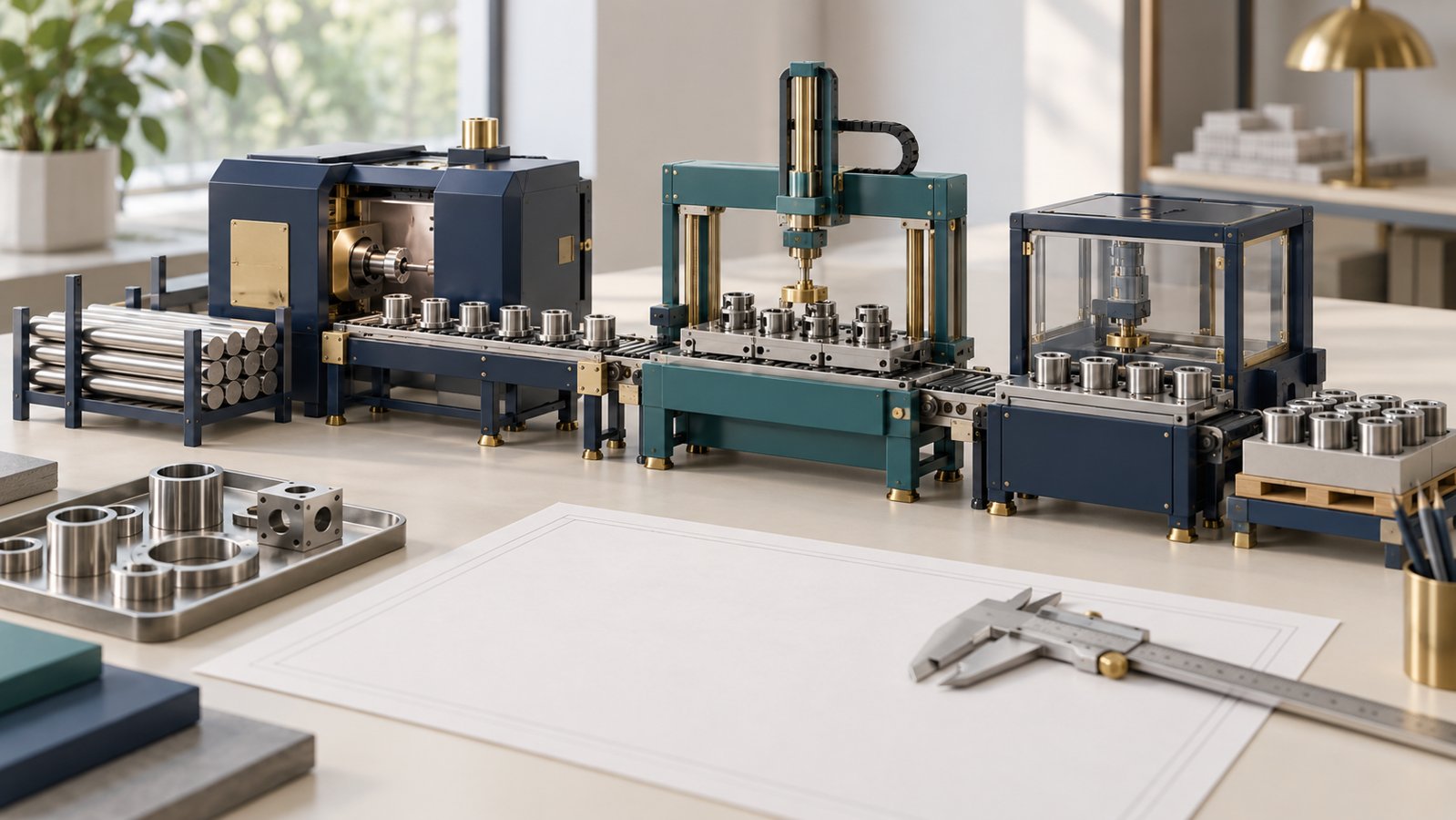
Original AI-generated conceptual illustration; this is not an actual CGFS client or financed facility.
A faster machine does not automatically create more cash. Before requesting equipment expansion financing, show how the purchase changes the output your business can deliver, how much customers are likely to buy and when those sales become collected cash. A clear funding case connects those three steps to a complete budget.
This guide offers a practical planning framework for a manufacturing expansion. The same questions can be adapted to processing, packaging and other equipment-dependent businesses. The example is hypothetical, not a financing offer or a lender approval standard.
Start with the constraint in the whole process
Map the route from incoming material to customer-ready product. Measure the output each stage can sustain under comparable operating conditions, including actual staffing, product mix and quality requirements. The slowest stage may limit the entire line even when other machines have unused capacity.
BDC's guide to identifying production bottlenecks explains why businesses should establish the cause of a constraint before adding equipment. Downtime, changeovers, material delays and staffing can affect throughput. Buying at the wrong stage may leave the original problem unresolved.
Attach a short measurement record to your expansion brief: observation dates, scheduled hours, good units completed, rejects, downtime and the cause of major interruptions. Distinguish measured results from supplier-rated capacity and management estimates. Explain whether the observation period represents normal operations or an unusually busy week.
Separate machine capacity from saleable output
Consider a simplified line with three sequential stages. The first can process 150 units a week, the second 90 and the third 120. Assume each finished unit passes through all three stages, capacities use the same unit basis and there are no losses. Sustainable output is limited to 90 units a week.
A proposed replacement raises the second stage to 140 units. The full line would then be limited by the third stage at 120. The purchase adds up to 30 units of weekly line capacity, not 50. Real forecasts must also address yield, maintenance and ramp-up; this simplified calculation is only a starting point.
Now suppose supported customer demand is 110 units a week. The planning case should use 20 additional weekly sales above the current 90, while showing the remaining ten units of capacity separately. Do not turn unused capacity into forecast revenue merely because it exists.
Show the quality and timing of demand evidence
Build a demand schedule by customer, product, volume and expected delivery month. Identify signed orders separately from quotations, sales discussions and management targets. Explain cancellation rights, customer acceptance requirements and any conditions that still need to be met.
Reconcile the schedule with recent sales and the current order book so that existing business is not counted again as new expansion demand. If one buyer accounts for most additional output, test what happens if that buyer delays or reduces orders. A larger market estimate can provide context, but it does not replace evidence for your own expected sales.
Translate additional sales into a cash forecast
Continue the hypothetical example using a four-week planning period. Twenty additional units a week produce 80 additional sales. At $500 per unit, that is $40,000 in incremental revenue. If variable costs are $300 per unit, the incremental contribution is $16,000 before additional fixed costs.
If added supervision, maintenance and other fixed operating costs total $6,000 for that period, the remaining $10,000 is before financing payments, taxes and changes in working capital. It is not automatically cash available for debt service. Identify which costs are already included to avoid counting them twice.
Build a separate receipts-and-payments schedule. Materials may be paid for before production, while customer receipts may arrive after delivery and acceptance. Include the existing business, existing financing obligations and proposed financing cash flows. Use actual proposed terms when available; label any provisional assumptions clearly.
For purchase, delivery and commissioning costs, use the companion equipment installation budget guide. Keep that uses-of-funds schedule connected to the operating forecast so installation payments and startup losses appear in the correct periods.
Test a slower expansion before choosing the funding amount
In a downside case, suppose additional sales reach only ten units a week. Over four weeks, 40 sales generate $8,000 of contribution at the same unit economics. After the assumed $6,000 in additional fixed costs, only $2,000 remains before financing, taxes and working-capital movements.
Also test a delayed start, lower selling price, higher scrap rate and slower customer collections. Show the lowest projected cash balance and identify a realistic response: phase the purchase, retain more liquidity, adjust staffing or revisit the equipment choice. Do not assume an additional funding facility will be available unless it is actually committed on usable terms.
Equipment expansion funding preparation checklist
- Define the current constraint and attach dated operating measurements.
- Reconcile supplier capacity claims with the rest of the production line.
- Separate confirmed orders, qualified opportunities and speculative demand.
- Document unit prices, variable costs, added fixed costs and their evidence.
- Include installation, commissioning and operating liquidity in the total budget.
- Prepare base and downside cash schedules covering ramp-up and repayments.
- State the requested amount, owner contribution, timing and unresolved assumptions consistently.
Frequently asked questions
Does higher equipment capacity justify a larger financing request?
Capacity alone is incomplete evidence. Explain the extra saleable output, demand, costs and cash timing, then reconcile the requested amount to documented uses and other funding sources. Funding decisions remain subject to the provider's assessment and terms.
Should the forecast assume full production immediately?
Only if there is evidence for that assumption. Allow for commissioning, training, quality approval and a gradual increase in output where relevant. Tie each increase to an operational milestone and show the effect of delays.
What if improving scheduling could remove the bottleneck?
Compare that alternative with the proposed purchase. Document implementation cost, durability of the improvement and the resulting output. The objective is a supportable expansion plan; the largest machine is not necessarily the most useful investment.
Prepare a clear funding conversation
CGFS reviews business and project funding requests of USD 1 million and above. If your expansion fits that scope, submit a funding inquiry with the amount, use of funds, location, timing and a concise explanation of the capacity and demand case. An inquiry is not a commitment to lend, invest or arrange funding; any proposal remains subject to due diligence, underwriting and final approval.
Sources and related resources
BDC — Identifying production bottlenecks: https://www.bdc.ca/en/articles-tools/operations/operational-efficiency/how-deal-with-bottlenecks-boost-productivity
CGFS — Equipment installation budget: https://www.creativeglobalfundingservices.com/equipment-installation-budget-beyond-purchase-price/
CGFS — Funding inquiry: https://www.creativeglobalfundingservices.com/request-funding.php
More Funding Insights

Equipment Installation Budget: Costs Beyond the Purchase Price
Build an equipment installation budget covering delivery, site readiness, commissioning and operating cash, with a worked example and funding checklist.
Read insight →
Equipment Financing Quotes: A Payment Comparison Worksheet
Compare equipment financing quotes using upfront cash, scheduled payments, final obligations and ownership. Includes a worked example and practical checklist.
Read insight →
Large Equipment Financing: A Strategic Guide to Business Growth | CGFS
Learn how large equipment financing can preserve working capital, increase capacity, and support sustainable business growth. Explore key structures and qualification factors.
Read insight →