
Mineral Resources vs Reserves: A Mining Funding Evidence Guide
Understand mineral resources versus reserves and prepare a traceable mining funding summary, with a worked example, evidence register and practical checklist.

A mineral estimate can describe a substantial deposit without showing how a financing proposal will repay capital. For a mining sponsor, the useful question is what the technical evidence supports today and which assumptions still need work. This guide explains mineral resources versus reserves, then offers a practical worksheet for keeping a funding summary aligned with its supporting reports.
Mineral resources versus reserves: the essential distinction
Under the Canadian CIM Definition Standards, resources have reasonable prospects for eventual economic extraction. Resource categories progress from inferred to indicated to measured with increasing geological confidence. Reserves are the economically mineable portion of measured or indicated resources after relevant modifying factors are assessed. These include technical, economic, legal, environmental and other considerations. An inferred resource cannot be converted directly to a reserve. A pre-feasibility study is the minimum study prerequisite for resource-to-reserve conversion under these standards.
These are reporting concepts, not funding approvals. Use the terminology and professional review appropriate to the project’s jurisdiction. The explanation above follows CIM’s published Definition Standards; the worksheet below is a practical preparation method, not a technical reporting standard. Source: https://mrmr.cim.org/en/standards/canadian-mineral-resource-and-mineral-reserve-definitions/
Build a one-page evidence register
Start with the exact report title, author, effective date, publication date and reporting framework. Add a link or document reference so a reviewer can find the underlying evidence. Keep the effective date separate from the date you downloaded the file: a newly received document can still describe an earlier project condition.
For each figure used in the funding presentation, record its page or table reference, unit, category and qualifications. Give the technical team ownership of checking the summary against the report. If two documents show different quantities, explain the difference before choosing the larger number. A revised boundary, updated model or changed assumption needs an explanation, not a silent replacement.
Separate physical quantities from financing cash flow
Keep ore tonnes, metal grade, contained metal, recovered product and sales receipts in separate rows. Even when a quantity is correctly reported, it does not automatically become saleable output or cash available for debt service. A funding model needs a documented bridge from the technical plan to production timing, customer payments and cash costs.
Consider an invented arithmetic example: 2 million tonnes at a copper grade of 1% imply 20,000 tonnes of contained copper. If a hypothetical model assumes 80% recovery, its recovered-metal calculation is 16,000 tonnes. This illustration does not establish a resource, reserve, mine plan or achievable recovery rate. It simply shows why contained and recovered quantities are different inputs.
At an illustrative price of USD $8,000 per tonne, 16,000 tonnes multiplied by that price gives $128 million before any sales adjustments or costs. It is not profit, project value or borrowing capacity. The figures are invented, not market forecasts. Actual cash receipts would depend on the product and commercial terms; the financing model must also reflect timing, operating and capital costs, taxes and other obligations.
Ask what has changed since the report
Create a short change log covering new test results, the development plan, commercial assumptions and unresolved dependencies. Assign each item an owner and a proposed resolution date. Ask the relevant technical professional whether the change affects the interpretation of the estimate or the suitability of the existing report for the intended use.
For example, a funding presentation may rely on a previously studied processing route while a current budget assumes different equipment. Flag that mismatch explicitly. Ask what further testing or engineering would be needed and keep its cost separate from the existing estimate. Do not imply that a cost-saving idea has already been technically validated.
Prepare these seven items for the capital discussion
- Report register: titles, authors, effective dates, framework and accessible document references.
- Estimate summary: categories, units, figures and the exact source tables, reviewed by the technical team.
- Assumption register: each important model input, its evidence, owner and review date.
- Change log: differences between the technical report, current development plan and funding presentation.
- Cash-flow bridge: production timing, sales terms, cash costs and the proposed use of funding.
- Open questions: unresolved technical or commercial matters and the work required to answer them.
- Version control: one dated funding summary reconciled with the supporting report and model versions.
Make uncertainty visible in the funding request
State exactly what the requested money is intended to accomplish. If further technical work is needed, identify the deliverable and decision it will support. If the proposal concerns construction or operations, explain the evidence supporting that stage and distinguish open conditions from completed work.
A useful meeting question is: “Which remaining evidence gaps would prevent your team from evaluating this proposal?” Record the answer by provider rather than treating one conversation as a universal lending rule. A technical report does not by itself establish collateral value, debt capacity or a commitment to fund. For a complementary budgeting method, see our mining milestone guide: https://www.creativeglobalfundingservices.com/mining-project-funding-milestone-budget/
Frequently asked questions
Is a mineral resource the same as a mineral reserve?
No. The distinction described above matters when summarizing a project. Preserve the report’s original classification and ask the responsible technical professional to check any simplified presentation.
Can I calculate a funding amount from contained metal value?
That shortcut leaves out too much. A funding request should be supported by defined uses, timing, available sources and a credible repayment or investment rationale. Multiplying a quantity by a commodity price is only arithmetic; it does not establish what a capital provider will advance.
Should I include older technical reports?
Include relevant background with clear dates and context, but identify the evidence on which the current proposal relies. Ask your technical and disclosure advisers how older information may be used for your intended audience and jurisdiction.
Discuss a qualified mining funding request
Creative Global Funding Services reviews qualified business and project funding requests of USD $1 million or more and connects applicants with potential capital providers. Prepare a clear requested amount, use of funds and evidence register. Funding remains subject to independent review, acceptable terms, documentation and final approval. Start a conversation: https://www.creativeglobalfundingservices.com/request-funding.php
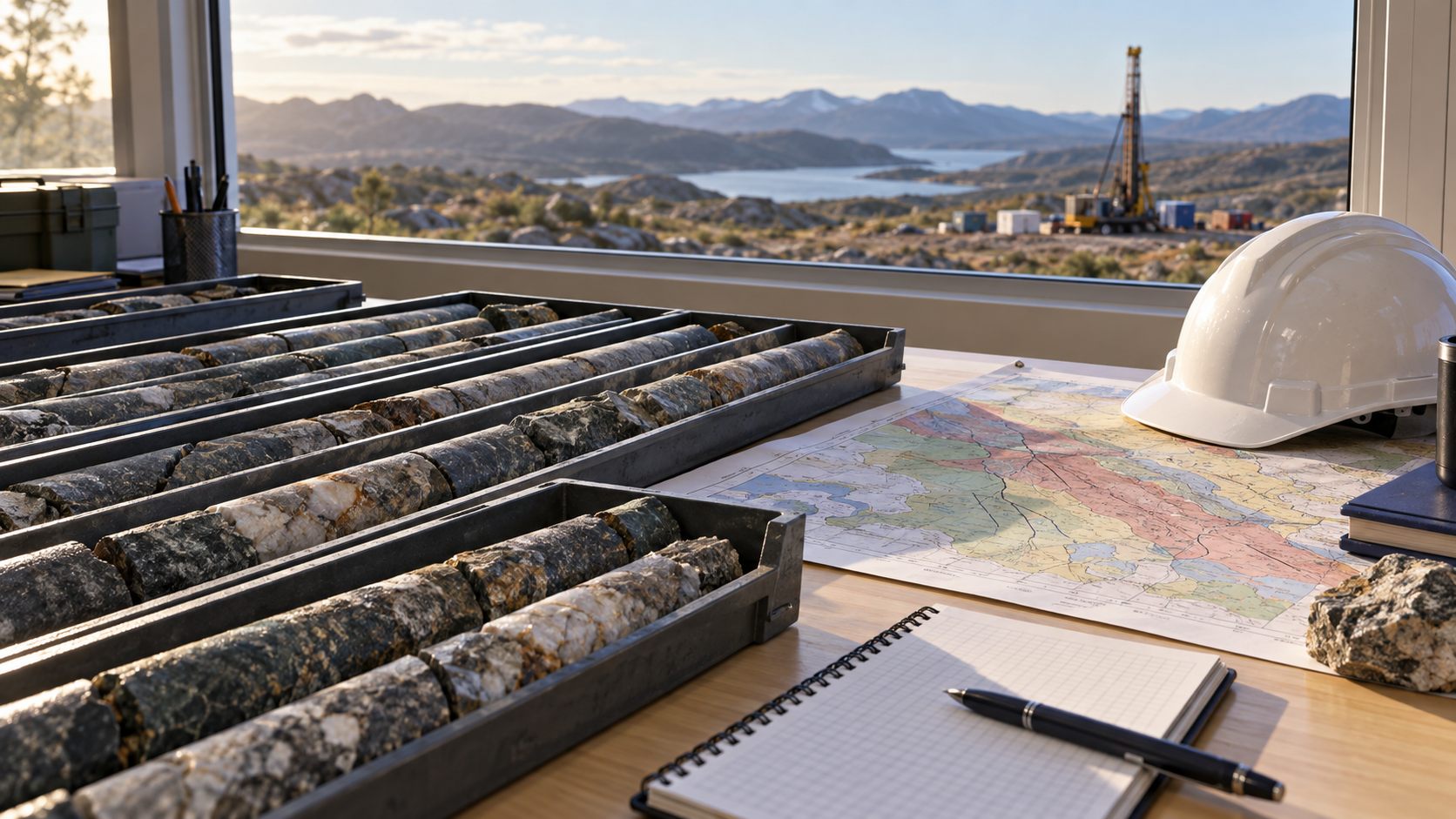
This article provides general funding education, not a mineral estimate or project-specific technical advice. Featured image: original AI-generated conceptual illustration; it does not depict a CGFS-financed property or client.
More Funding Insights
Mining Project Funding: Budget for the Next Milestone
Connect a mining funding request to a defined technical milestone, a supported budget and a clear decision point, with an illustrative funding-gap calculation.
Read insight →
Mining Finance
Mining finance is critical to the development and operation of a mining venture. Learn what capital providers may review when evaluating qualified mining projects and how sponsors can prepare a stronger funding request.
Read insight →
Accounts Receivable Aging: Prepare a Clear Business Funding Review
Prepare an accounts receivable aging report for a funding discussion. Review overdue invoices, customer concentration and collection timing with a worked example.
Read insight →