
Mine Closure Costs: Plan Financial Assurance and Cash Needs
Prepare a clearer mining funding request by separating closure cost estimates, financial assurance and cash requirements, with a worked example and checklist.

Mine closure costs belong in a funding conversation before the last tonne is produced. A project may have a credible development budget yet still leave an unanswered question: how will rehabilitation obligations affect the cash available for construction and operations? A useful funding brief separates the estimated work, the security required and the timing of actual payments.
This guide offers a preparation framework for mining sponsors. It is not a site-specific closure estimate or a statement of regulatory requirements. Have qualified technical, environmental, accounting and legal advisers confirm the assumptions for the project’s jurisdiction and stage.
Separate three numbers before discussing funding
First, identify the closure cost estimate: the assessed cost of carrying out the defined rehabilitation and aftercare work. Second, identify financial assurance: the security arrangement intended to support the obligation. Third, identify the cash requirement: money the sponsor must actually provide on particular dates for deposits, collateral, fees or work. These figures answer different questions and should have separate lines in the funding model.
For example, a security instrument with a stated face amount is not necessarily an unrestricted cash account available to pay contractors. Equally, an accounting liability does not establish that cash has been set aside. Ask the finance team to explain how its accounting figures reconcile to the operational estimate and the security documents.
Start with the closure scope and its evidence
The World Bank Group’s Environmental, Health, and Safety Guidelines for Mining, published in 2007, recommend incorporating closure and post-closure costs into feasibility analysis during planning and design. They also address early or temporary closure, aftercare and review of funding arrangements. These are reference guidelines; their applicability must be assessed alongside the project’s local requirements. Source: https://www.ifc.org/content/dam/ifc/doc/2000/2007-mining-ehs-guidelines-en.pdf
For the funding brief, prepare a scope register that connects each cost line to a dated technical document. Identify the area or facility, the work assumed, the estimate owner, the pricing date and any unresolved design question. Use a separate uncertainty column rather than burying an unsupported amount inside a total.
Ask the specialist team to distinguish physical rehabilitation, water management, monitoring, maintenance and any other site-specific obligations. Record the assumed duration for recurring activities. A short spreadsheet should point reviewers to the underlying study, not attempt to replace it.
Check what financial assurance actually requires
British Columbia describes reclamation security as covering site reclamation costs if a mining company defaults on its obligation. That is a jurisdiction-specific example of the purpose of security, not a universal rule for every mining project. Consult the relevant authority and current permit conditions for the required amount, acceptable form and timing. Source: https://www2.gov.bc.ca/gov/content/industry/mineral-exploration-mining/permitting/mine-reclamation-securities
If a bank or other provider is being asked to issue an instrument, obtain a written proposal describing collateral, fees, expiry, renewal and reimbursement obligations. Do not assume a quoted face amount means the same amount is borrowed in cash. Record whether an arrangement consumes another credit facility’s capacity, and ask the provider to explain any restrictions. Availability and terms remain subject to its own assessment.
Worked example: the estimate is not the cash gap
Consider a fictional project using USD throughout. Its planning estimate for closure is $2,000,000. For this illustration only, assume the relevant authority has accepted a $2,000,000 security instrument, and its issuer requires $600,000 of cash collateral plus $40,000 of first-year fees. These amounts are invented to demonstrate the method; they are not typical pricing or a proposed financing offer.
The sponsor also budgets $150,000 for near-term rehabilitation work and $30,000 for an estimate update. Its cash requirement for the period is therefore $820,000: $600,000 + $40,000 + $150,000 + $30,000. With $500,000 of unrestricted cash allocated to those uses, the identified gap is $320,000. The $2,000,000 face amount is not added again as if it were another immediate cash payment.
Timing still matters. If the $600,000 collateral and $40,000 fees are due before the other expenditures, $500,000 of available cash leaves an initial $140,000 shortfall. The later $180,000 of work and study costs brings the total gap to $320,000, assuming no intervening receipts. A later expected investment does not solve the earlier deadline unless its availability is confirmed.
This example does not eliminate the eventual cost of closure. Show future work and the conditions for applying or releasing collateral in the longer-term model. Ask advisers to prevent double counting when the same security funds are expected to pay for the same obligation later. Test a separate fully cash-funded scenario if the proposed instrument is not approved.
A practical funding-review checklist
Before sharing the request, assemble a compact evidence pack with the following items:
- A dated closure scope and cost estimate, including the author, currency, assumptions and exclusions.
- The applicable permit or authority correspondence confirming the security obligation and submission deadlines.
- The proposed instrument terms, collateral requirements, fees and renewal dates, with approval status clearly marked.
- A monthly cash schedule separating unrestricted cash from restricted deposits and proposed funding from committed sources.
- A reconciliation explaining differences between the technical estimate, required security and accounting figures.
- A named owner and review date for unresolved items, plus a downside case for higher costs or delayed funding.
Keep the mining evidence consistent
Use the same project boundary and study version throughout the technical report, closure register and funding request. If the proposed footprint expands, flag which estimates need updating before treating the financing amount as settled. Keep a short change log so reviewers can see what changed and why.
Closure planning is one part of a broader evidence package. For help keeping geological terminology and study support clear, read our Mineral Resources vs Reserves guide: https://www.creativeglobalfundingservices.com/mineral-resources-vs-reserves-funding-evidence/
Frequently asked questions
Does a closure estimate show how much cash must be deposited today?
No. Review the applicable security requirement and the provider’s terms, then map the actual payment dates. The estimate, instrument amount and immediate cash requirement may differ; explain the reason rather than assuming they are interchangeable.
Can restricted security cash also fund project development?
Do not count it as available unless the governing arrangement expressly permits that use. Obtain confirmation of restrictions and release conditions before including any amount in available funding.
Does a strong closure plan guarantee financing?
No. It helps explain obligations and cash needs, but a funding decision also depends on the project’s wider technical, commercial and financial case, due diligence and the capital provider’s approval.
Prepare a clear capital conversation
Creative Global Funding Services connects qualified businesses and project owners with potential capital providers. For a funding request of USD $1 million or more, describe the project stage, amount sought, intended uses and timing, including any closure-related cash requirements. All opportunities remain subject to review, due diligence, underwriting and final approval. Start an initial funding inquiry: https://www.creativeglobalfundingservices.com/request-funding.php
Image disclosure: The featured image is an original AI-generated conceptual illustration of mine reclamation planning. It does not depict a real CGFS client, financed project or engineering design.
More Funding Insights

Mineral Resources vs Reserves: A Mining Funding Evidence Guide
Understand mineral resources versus reserves and prepare a traceable mining funding summary, with a worked example, evidence register and practical checklist.
Read insight →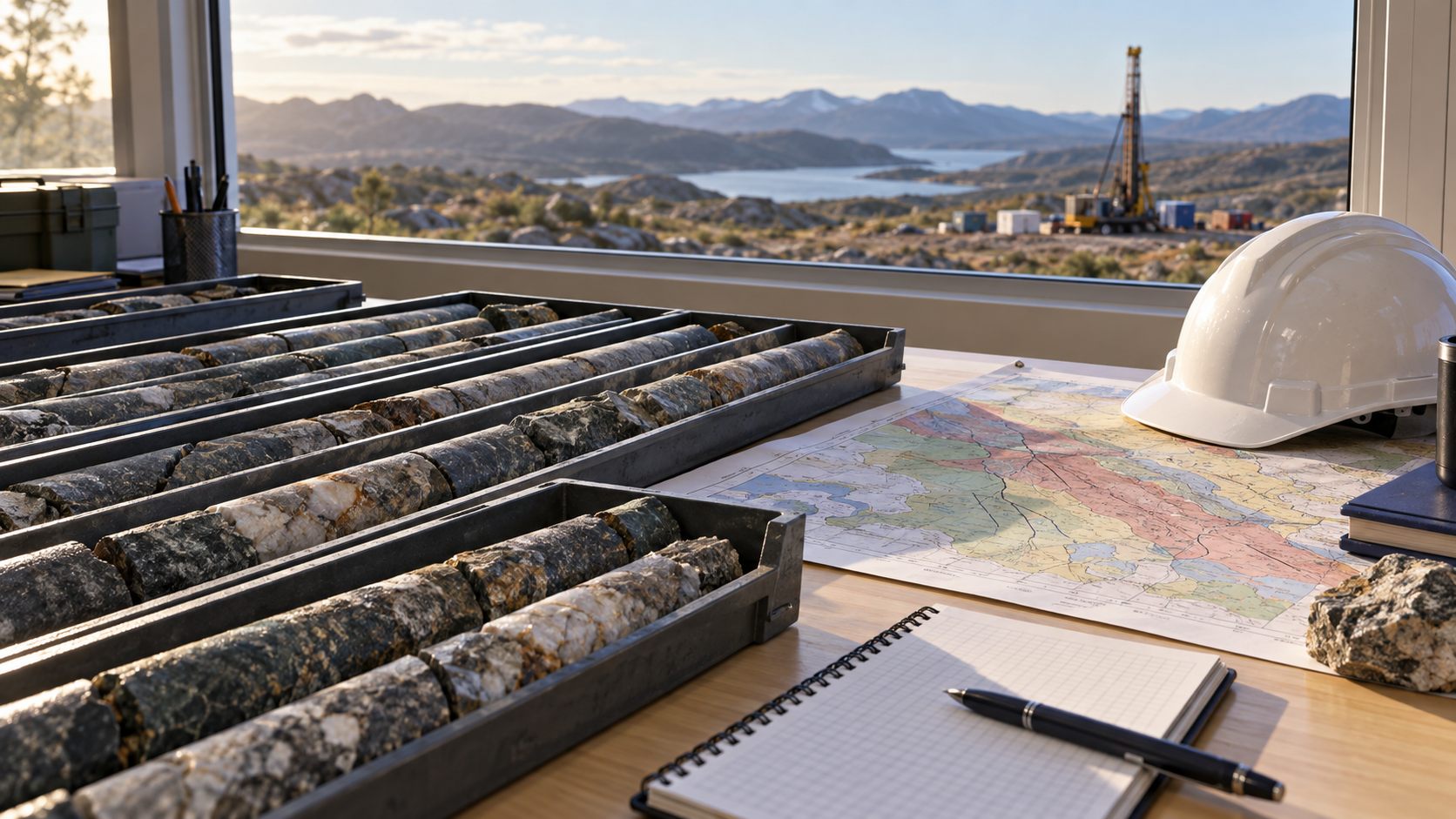
Mining Project Funding: Budget for the Next Milestone
Connect a mining funding request to a defined technical milestone, a supported budget and a clear decision point, with an illustrative funding-gap calculation.
Read insight →
Mining Finance
Mining finance is critical to the development and operation of a mining venture. Learn what capital providers may review when evaluating qualified mining projects and how sponsors can prepare a stronger funding request.
Read insight →